Beef Haleem
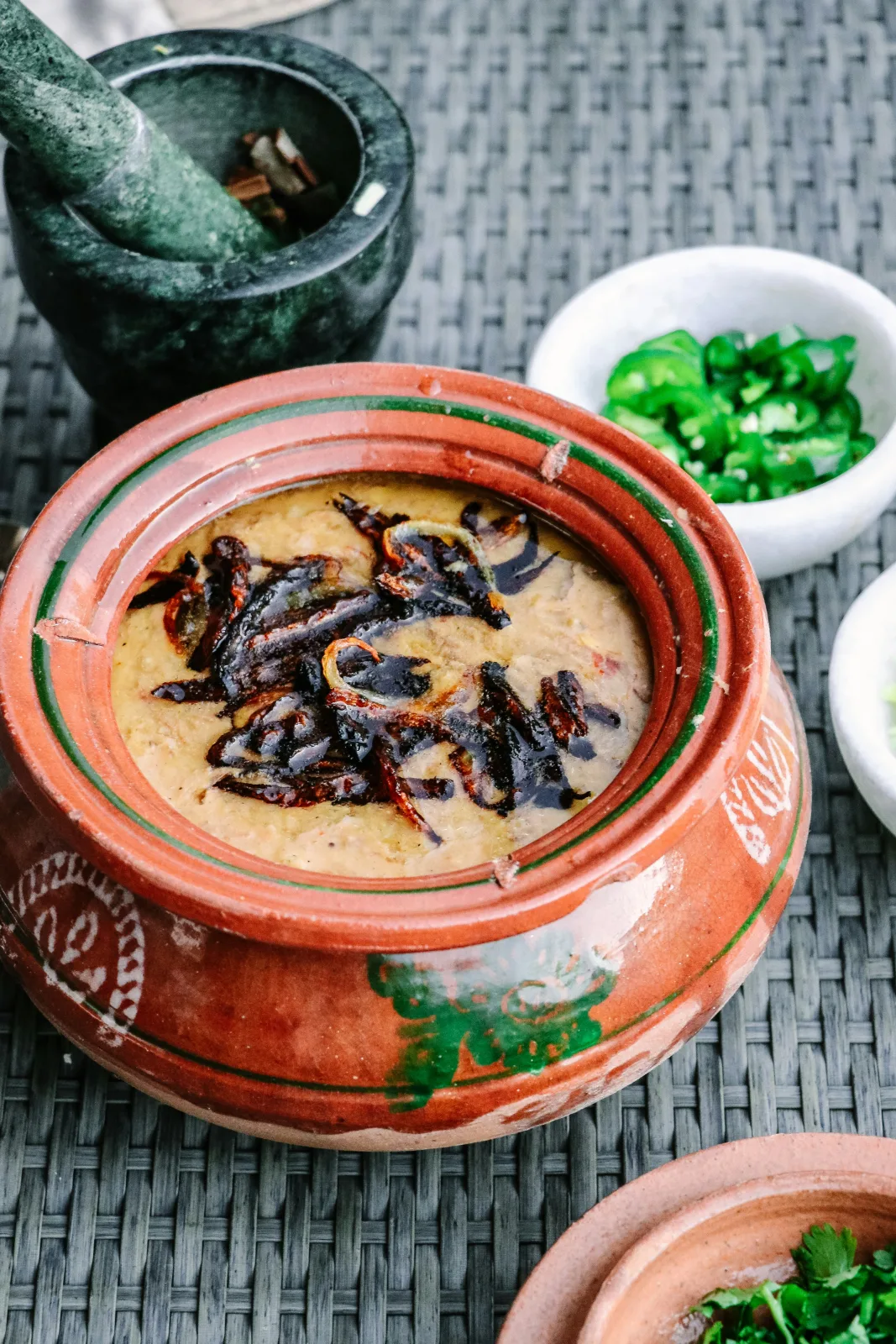
A thick, slow-simmered porridge of tender beef, wheat and mixed daals, finished with fried onions, ginger and lemon. Cook a big pot for family dinners or gatherings.
Ingredients
Equipment: Large heavy-bottomed pot with lid (5 litre or bigger), wooden masher or hand blender, wooden spoon, slotted spoon, paper towel
Method
Rinse the wheat, barley, all four daals and rice, then soak them together in plenty of water for at least 4 hours or overnight. Drain well before cooking.
Heat the oil or ghee in a large heavy pot over medium heat. Add the sliced onions and fry, stirring often, for about 15 minutes until deep golden brown, not burnt.
Scoop out roughly half of the fried onions with a slotted spoon and set them aside on paper towel for garnish. They will crisp as they cool.
To the onions left in the pot, add the cumin seeds, peppercorns, cardamoms, cloves, cinnamon and ginger garlic paste. Stir for 1 minute until the raw smell fades.
Add the beef, salt, chilli powder, turmeric and coriander powder. Cook on medium-high heat, stirring, for about 8 minutes until the meat changes colour and the spices smell fragrant.
Lower the heat, stir in the whisked yogurt and cook for 5 minutes until the oil begins to separate at the edges.
Pour in 1.5 litres of hot water and bring to a boil. Cover, reduce to a low simmer and cook for about 90 minutes until the beef is very tender and pulls apart easily with a spoon.
Add the drained grains and daals with the remaining 1.5 litres of hot water. Bring to a boil, then cover and simmer on low for about 60 minutes, stirring from the bottom every 10 minutes so nothing sticks. The wheat should be completely soft.
Mash and beat the haleem hard with a wooden masher, or pulse briefly with a hand blender, until the meat shreds and the mixture turns thick, stretchy and porridge-like. Leave a little texture rather than making a smooth purée.
Stir in the garam masala and simmer uncovered on low for 30 minutes, stirring often, adding a little hot water if it becomes too thick to pour slowly from a spoon. Taste and adjust the salt.
Switch off the heat and let the haleem rest, covered, for 10 minutes. Serve in bowls topped with the reserved fried onions, ginger matchsticks, green chillies, fresh herbs and a squeeze of lemon.
Cooking tips
- Soaking the grains and daals overnight cuts cooking time and gives a softer, creamier result.
- Stir from the bottom regularly once the grains go in. Haleem catches on the base of the pot easily, so keep the heat low.
- The right consistency is thick and slow-moving, like a loose porridge. It will thicken further as it cools, so loosen with hot water when reheating.
- Do not skip the mashing step. Beating the pot gives haleem its stretchy, well-blended texture.
Substitutions
- Use mutton or bone-in beef shank instead of boneless beef. Bone-in cuts add body but need 30 to 45 minutes longer.
- If you cannot find broken wheat, use whole wheat berries soaked overnight, or ready-made haleem mix (daliya and daal blend) in the same total weight.
- Swap the yogurt for 2 chopped tomatoes if you prefer a less tangy base.
- Use a pressure cooker for the beef step: cook the beef with spices and 1 litre of water for about 40 minutes, then continue in an open pot with the grains.
Serve with
Serve hot in deep bowls with fried onions, ginger matchsticks, green chillies, fresh coriander, mint and lemon wedges. Naan or plain paratha is good for scooping, and a little chaat masala on top adds tang.
Storage
Cool completely, then keep in an airtight container in the fridge for up to 3 days. Freeze in portions for up to 2 months, without the fresh garnishes.
Reheating
Warm gently in a pot over low heat with a splash of hot water, stirring often, until steaming hot throughout. Thaw frozen portions in the fridge overnight first.
Nutrition per serving, estimated
Not shown for this recipe because it can’t be estimated reliably (for example, oil absorbed during deep frying varies a lot).
You might also cook
 Pakistani
Chicken Biryani
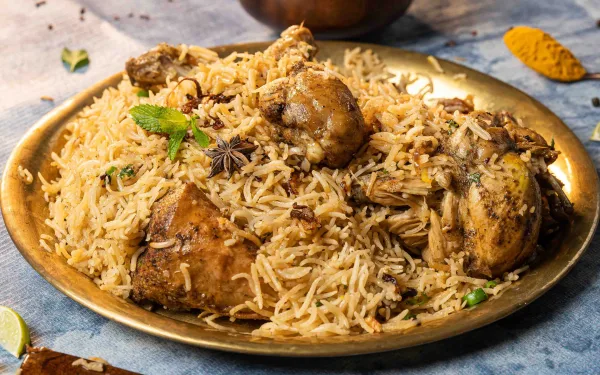
Layers of long-grain basmati and a tangy, spiced chicken masala, steamed together until every grain stays separate. Made with potatoes and dried plums, the way many Karachi homes make it.
 Pakistani
Masala Omelette
The dhaba-style omelette: eggs beaten with onion, tomato, green chili and coriander, cooked thin and folded.
 Pakistani
Beef Nihari
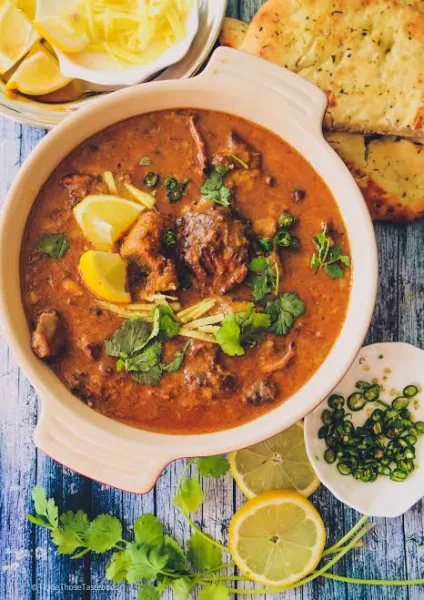
Beef shank slow-cooked in a spiced gravy thickened with toasted flour. A weekend project that mostly cooks itself.
 Pakistani
Aloo Gobi (Dry-Style Potato and Cauliflower Masala)
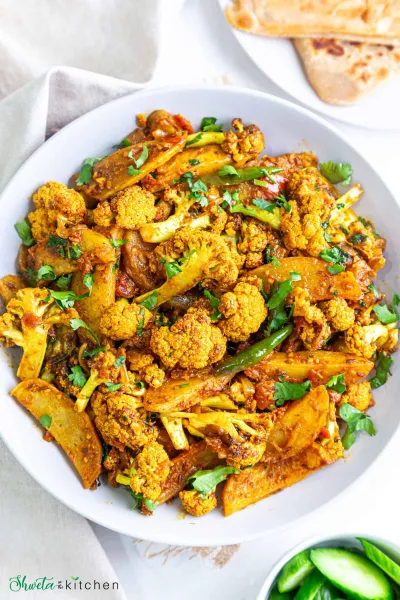
A dry, gently spiced curry of potato and cauliflower with cumin, turmeric and fresh ginger. Easy to make in one pan and good with hot roti for a weekday lunch.
Pakistani kitchen
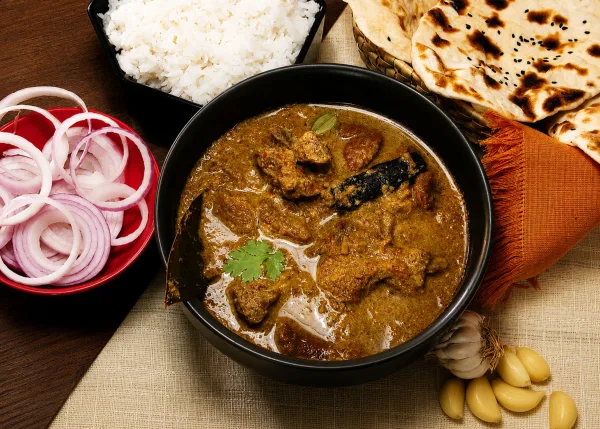 Pakistani
Mutton Chops Masala (Pressure-Cooked Lamb Chops in Thick Onion-Yogurt Masala)
Mutton chops are marinated, pressure-cooked until soft, then finished in a thick, glossy masala that clings to the bone. A good Sunday dinner with naan or rice.
 Pakistani
Tawa Naan (Soft Yogurt Naan Cooked on a Griddle)
Soft, bubbly naan made with yogurt and milk, cooked on a hot tawa or in the oven. A dependable flatbread for karahi, daal and kababs, no tandoor needed.
 Pakistani
Chicken Corn Soup
A thick, gently peppery soup of shredded chicken, sweet corn and silky egg ribbons, in the style of Pakistani Chinese restaurants. Easy to make at home on a cold evening.
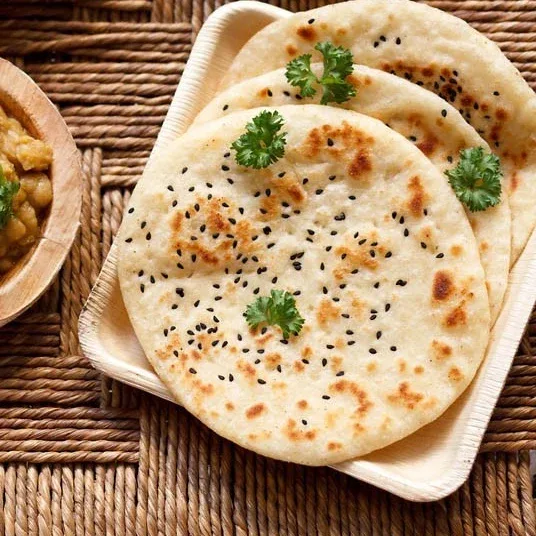 Pakistani
Kulcha (Oven-Baked Yogurt Bread with Nigella and Sesame)
Soft, fluffy round breads made with yogurt and milk, topped with nigella and sesame and brushed with butter. They bake in a hot home oven and go well with chanay, daal or any curry.