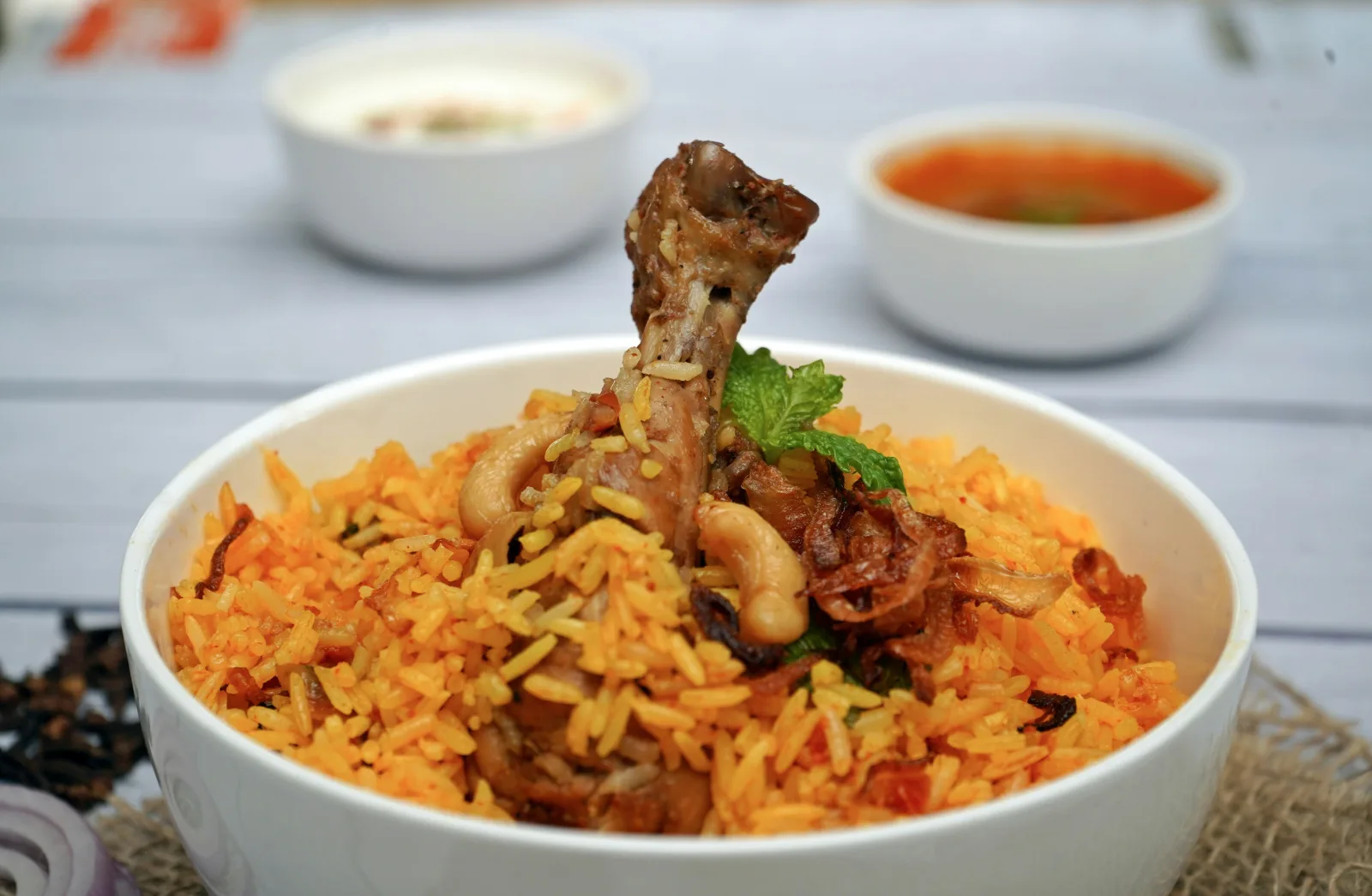
Sindhi Biryani
A tangy, herb-heavy mutton biryani from Sindh, layered with fried potatoes, dried plums and green chillies. It's spicier and more sour than most biryanis, and it makes a full dinner for a crowd.
Ingredients
Equipment: Large heavy-bottomed pot with a tight lid, large pan for frying, tawa or flat griddle for dum, colander
Method
Mix the mutton with the yogurt, ginger-garlic paste, chilli powder, turmeric, coriander powder, cumin powder and 2 tsp salt. Leave it to marinate while you prepare everything else, for at least 30 minutes.
Heat the oil in a large pot over medium heat. Fry the sliced onions, stirring often, until deep golden brown, about 15 minutes. Lift out half of the onions onto a plate for layering later.
To the oil and remaining onions, add the cumin seeds, bay leaves, green and black cardamom, cloves, cinnamon and peppercorns. Stir for 30 seconds until fragrant.
Add the marinated mutton and fry over medium-high heat, stirring, until the meat changes colour and the oil begins to separate, about 8 minutes.
Add the sliced tomatoes and half of the green chillies. Cook for 5 minutes until the tomatoes soften and break down.
Pour in 500 ml hot water and bring to a boil. Cover and simmer on low heat until the mutton is about 80% tender and a thick masala remains, around 50 minutes. Add a splash of hot water if it dries out.
While the mutton cooks, fry the potato quarters in a separate pan with a little oil until golden on the outside and half cooked inside, about 10 minutes. Set them aside.
Bring 3 litres of water to a rolling boil with 1 tbsp salt, the whole spice of your choice if you like, and a few slit chillies. Add the drained rice and boil for 5 to 6 minutes, until the grains are 70% cooked and break easily when pressed but still have a firm centre. Drain right away.
Stir the fried potatoes, drained soaked plums, lemon juice, half the mint and half the coriander into the mutton masala. The gravy should be thick and clinging to the meat; if it's watery, cook uncovered for a few minutes.
Spread half of the parboiled rice over the masala. Scatter over the reserved fried onions, the remaining mint, coriander and green chillies, then top with the remaining rice.
Drizzle the saffron milk, kewra water and 2 tbsp ghee over the top. Poke a few holes down through the rice with a spoon handle so steam can travel.
Cover the pot with a tight lid, sealing with foil if the lid is loose. Place it on a hot tawa over the lowest heat and cook on dum for 20 minutes. The rice should be fully tender and the mutton soft.
Turn off the heat and rest the pot, covered, for 10 minutes. Gently fold the rice and masala together from the bottom up before serving.
Cooking tips
- Keep the rice slightly undercooked before layering; it finishes in the steam and stays separate instead of turning mushy.
- Sindhi biryani is meant to be sour and spicy. Taste the masala before layering and add more lemon juice or a few more plums if you want it tangier.
- Fry the potatoes only until golden. They finish cooking during dum and would fall apart if fully cooked first.
- Use a tawa under the pot to prevent the bottom layer from scorching.
Substitutions
- Use beef (with a longer cooking time, or a pressure cooker for 30 minutes) or bone-in chicken (reduce simmer time to 20 minutes) instead of mutton.
- If you can't find aloo bukhara, use dried apricots plus an extra tablespoon of lemon juice or 1 tbsp tamarind pulp.
- Replace kewra water with 1/2 tsp rose water, or leave it out.
- Use 1 tsp orange food colour dissolved in milk instead of saffron.
Serve with
Serve hot with cooling raita, kachumber salad (cucumber, tomato, onion) and lemon wedges. A few extra green chillies on the side are welcome.
Storage
Cool within 1 hour and refrigerate in an airtight container for up to 2 days. Freeze portions for up to 1 month.
Reheating
Sprinkle a spoonful of water over each portion, cover and microwave for 2 to 3 minutes, or warm in a covered pan over low heat, until steaming hot all the way through (at least 74°C).
Nutrition per serving, estimated
Estimated from the ingredient list. Values vary with brands and portion size.
You might also cook
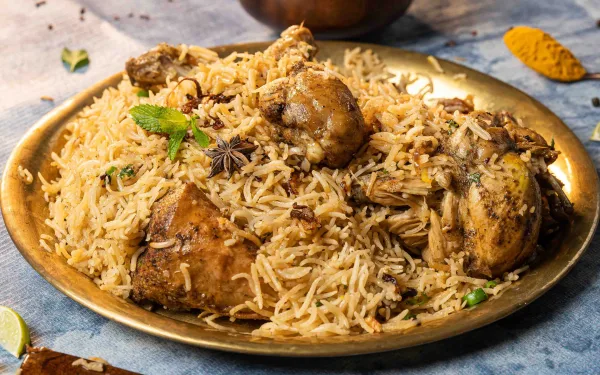 Pakistani
Chicken Biryani
Layers of long-grain basmati and a tangy, spiced chicken masala, steamed together until every grain stays separate. Made with potatoes and dried plums, the way many Karachi homes make it.
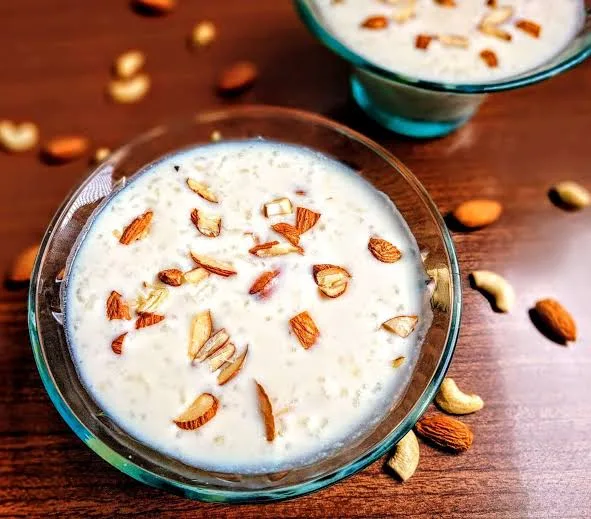 Pakistani
Chawal ki Kheer
Rice simmered slowly in milk with cardamom until creamy, finished with pistachios and almonds. Serve chilled in clay bowls.
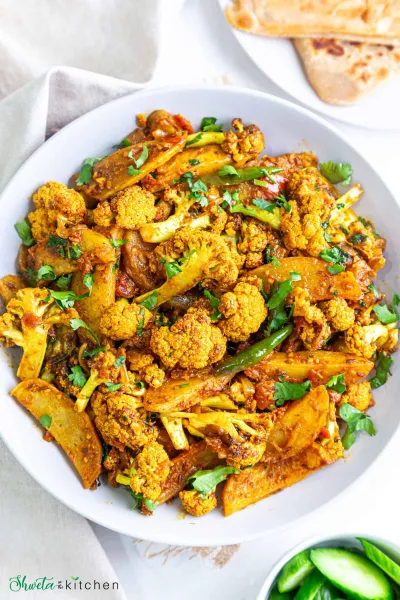 Pakistani
Aloo Gobi (Dry-Style Potato and Cauliflower Masala)
A dry, gently spiced curry of potato and cauliflower with cumin, turmeric and fresh ginger. Easy to make in one pan and good with hot roti for a weekday lunch.
 Pakistani
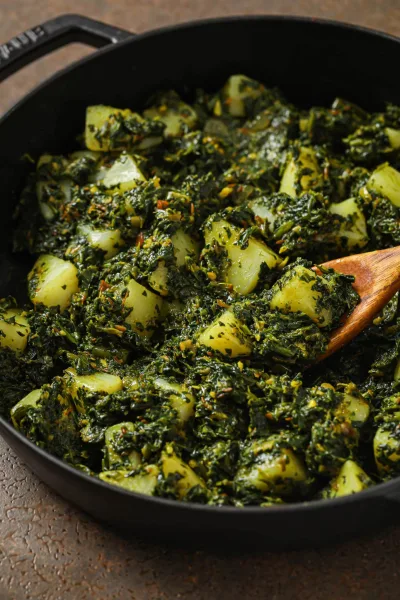
Aloo Palak (Potato and Spinach Curry with Cumin and Ginger)
Tender potatoes simmered in a smooth spinach and onion-tomato masala, finished with garam masala and lemon. A simple everyday sabzi that is ready in under an hour and suits roti or rice.
Pakistani kitchen
 Pakistani
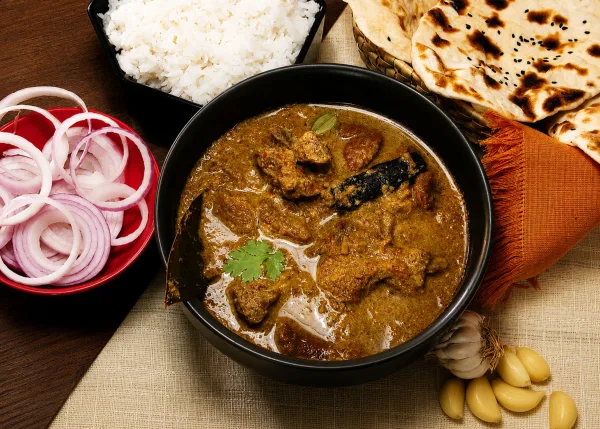
Mutton Chops Masala (Pressure-Cooked Lamb Chops in Thick Onion-Yogurt Masala)
Mutton chops are marinated, pressure-cooked until soft, then finished in a thick, glossy masala that clings to the bone. A good Sunday dinner with naan or rice.
Tawa Naan (Soft Yogurt Naan Cooked on a Griddle)
Soft, bubbly naan made with yogurt and milk, cooked on a hot tawa or in the oven. A dependable flatbread for karahi, daal and kababs, no tandoor needed.
 Pakistani
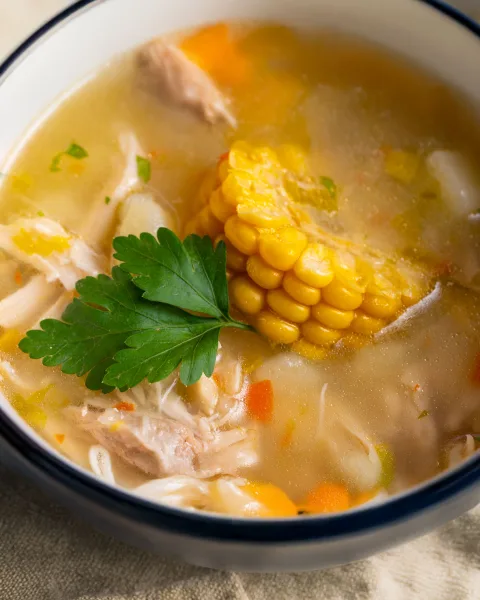
Chicken Corn Soup
A thick, gently peppery soup of shredded chicken, sweet corn and silky egg ribbons, in the style of Pakistani Chinese restaurants. Easy to make at home on a cold evening.
Kulcha (Oven-Baked Yogurt Bread with Nigella and Sesame)
Soft, fluffy round breads made with yogurt and milk, topped with nigella and sesame and brushed with butter. They bake in a hot home oven and go well with chanay, daal or any curry.